Ride report: Baker City, OR

I am writing this post the day after the ride–technically, my ride ended after midnight, so arguably it is the same day.

I reached Mitchell–home of the Spoke’n Hostel–pretty early and had their spaghetti for breakfast, although the 30-mile climb out of Prineville meant I wasn’t too early. Mitchell is in a valley, so after that long climb, you give up all that altitude, and then climb it again to get out. By the time I left, the day has heated up.

Most of the rest of the day is a blur. The three big climbs after Mitchell were all late in the ride, well after the halfway point. By the time I finished the second of them, it was chilly enough that I needed my jacket for the descent. After the third, it was cold enough that I needed to add more warm clothes, and my sweat-soaked jersey was chilling me, so I needed to take that off. Finding a place I could even lean my bike took a while, and then I was working in complete darkness. I was exhausted enough that I knew to be concerned about dumb mistakes, and tried to be very methodical. Even so, I rode off without my bone-conduction headset on, but it was hooked around my handlebars, so no loss there.

One minute after I passed the Baker City City limit sign, the sky opened up. I was only in the rain for about 10 minutes but got soaked.

I had set the goal of reaching Baker City because there’s a bike hostel there. I knew it would be a big push.

It was too long. 195 miles with 5 major climbs. My appetite has been hit-or-miss, and my last solid food of the day wasn’t sufficient.

Ride report: Prineville, OR

Slept well and woke up at 5:30. Got rolling about 45 minutes later. Not great efficiency. Rode to Lewisburg and stopped at a greasy spoon for breakfast.

At some point while riding along the McKenzie River, I pulled over to strip off my warm clothes, and was passed by another racer, Richard. We rode together for a bit and stopped at a convenience store shortly before the turnoff for McKenzie Pass, the day’s main event. As we pulled in, another racer was pulling out and yelled his recommendation for the chicken tenders.

I rolled out a little before Richard and reached the turnoff. A couple of guys from Portland were getting their bikes ready; we chatted for a bit about whether the road was really closed due to a recent rockslide that needed to be cleaned up. We all agreed it was worth chancing it. I rode in ahead, knowing they’d pass me quickly.

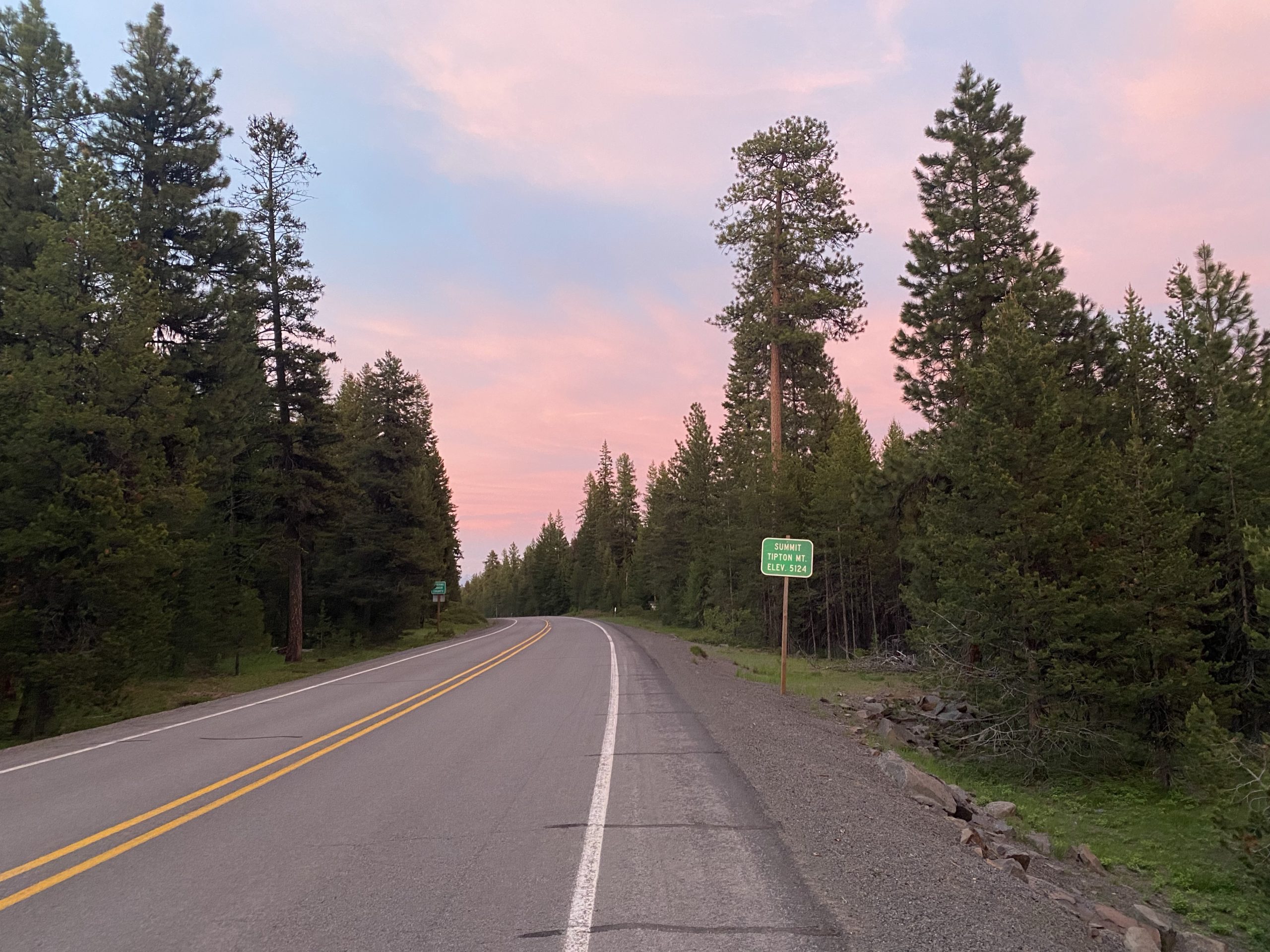
The pass is at an altitude of about 5200 feet; the base is at about 1000 feet. As you ascend, you pass altitude markers every 1000 feet. At about 3500 feet, I had to take a break–I was whipped, my back hurts, and I ran across a rail I could use as a bench and prop for my bike. Before reaching 4000 feet, I came upon the Portland guys. I assumed they had already reached the top and were coming down. Nope. They were taking their time, I guess. There were a lot of cyclists on the climb–it’s a well known destination, especially right now when it is closed to motor traffic. There are gates at the east and west sides partway up that cyclists and peds can bypass.

I ran across a couple more racers, Mike and another guy whose name I didn’t catch. Mike and I rode together for a bit; I learned he’d read my blog entries about the 2021 race.

The top of the mountain is like Mount Doom–no life, just broken lava rock everywhere.

On the way down, I chatted with a rider going the other way, and later, at the eastern gate, there was another rider coming the other way. We chatted for a bit too. Something seemed familiar about him, and after he asked my name, I told him and said “and you’re Evan Deutsch, aren’t you?” He was. He’s won the TABR and has some very high placements when he didn’t. Nice guy, very down-to-earth.

I made it to the next town of Sisters, a very cute town blessed with two bike shops, which is pretty rare. Only one was open, so I went there. Blazin Saddles. My shifting has been off, and I hadn’t been able to fix it myself, so I suspected the derailleur hanger was out of alignment. It was. They dropped everything and got me fixed right up. Another racer was in there buying spares.

As long as I was making a stop in Sisters, I decided to eat. I found a food truck serving Mexican food and ordered a taco plate. Weirdly enough, I had to force myself to eat it–i just don’t have much of an appetite. This is a problem. There’s only so far I can go on stored fat.

My original goal for today has been Mitchell OR. What I realized was that I’d be arriving after nightfall, and the descent into town is scary enough in the daylight. I wound up stopping 40 miles short, in Prineville.

Ride report: Springfield, OR

A big day on the bike. We had a strong tailwind almost all day, and it’s clear many of the racers are making hay while the sun shines. The guys at the pointy end are all around 300 miles for the day, and probably not stopping.

A lot of climbing too, including a couple of very long, steep grades. I saw one racers going up the first of these on foot. Somehow, much later, I saw he had beat me to a road–but was on the wrong side of it. There was another racers I kept swapping positions with. I rode faster than him, but stopped more often.

My goal has been to average 180 miles/day, and it’s nice to start off with some extra miles in the bank.

I stopped in Tillamook for an early lunch at the Safeway, where I encountered my first dot-watcher, had a few snacks along the way, and stopped in Corvallis for dinner at a semi-fancy pasta place called Pastini. It was nice pretending to be civilized. I pushed on another 40 or so miles to Coburg, and am actually a little off course at a Motel 6 in Eugene. The place reeks of despair.

I’m going to sleep until I’m done sleeping.

Packed and ready

Take to the Sky, ready to go

Apart from a handful of small items I’ll need between now and tomorrow morning, my bike is ready for the Trans Am Bike Race.

My self, that’s another matter.

TABR gear list

Here’s my packing list for the Trans Am Bike Race 2023.

Tools, gadgets, and spares

Left to right, top to bottom (more or less)

  • Short length of gorilla tape
  • Zip tipes
  • Paracord
  • Derailleur cable
  • Fiberfix spoke
  • Disc brake pads
  • Extra length of chain
  • Chain tool
  • Extra spokes
  • Extra master links
  • Sugru
  • Thread locker
  • Extra SPD cleat
  • Random small screws
  • Derailleur hanger
  • CR2032 battery (for heart-rate monitor)
  • Spare dynaplug plugs
  • 2 innertubes
  • Tire boots
  • Pump
  • Tyre key
  • Shokz headset
  • Multi-head USB cable
  • Wolf Tooth 8-bit tool
  • USB converter for dynamo
  • Gerber Dime multitool
  • Dynaplug
  • Power bank
  • Wall charger
  • Patch kit
  • Extra valve cores
  • Taillights: Lezyne Strip × 2 plus Cygolite Hypershot 350
  • Secondary headlight: Magicshine ZX Pro (main headlight is on bikes).

This stuff will be stored in my Camelbak pocket, top-tube bag, and Tailfin bag, based on how likely I am to need it. It all packs down pretty small, and I will depackage the stuff that needs it. I’ll probably cut that paracord shorter. Everything in this picture weighs 1325 g.

My wheels are set up tubeless, but I do need to be able to fall back to tubes if necessary. I am debating bringing a spare tire.

Not shown:

  • Chain lube: I will be bringing 2 oz of Silca liquid wax lube.
  • Garmin InReach Messenger satellite tracker

Clothing

  • Smartwool undershirt
  • Spatzwear undershirt
  • Gore leg warmers
  • Running shorts (in case I can wash all my stuff and need to stay decent)
  • Galibier jacket (doesn’t seem to be currently listed on their website)
  • Stolen goat jerseys × 2
  • Castelli shorts × 2
  • Galibier shoe covers
  • Gore Wear cool-weather cloves
  • Specialized cold-weather gloves
  • Reflectoes socks × 2
  • Specialized Grail gloves
  • Beanie

All this weighs 2103 g. Some of it will be on my body at any given time.

Not shown:

  • Lake cycling shoes
  • Wool cold-weather socks

Personal care

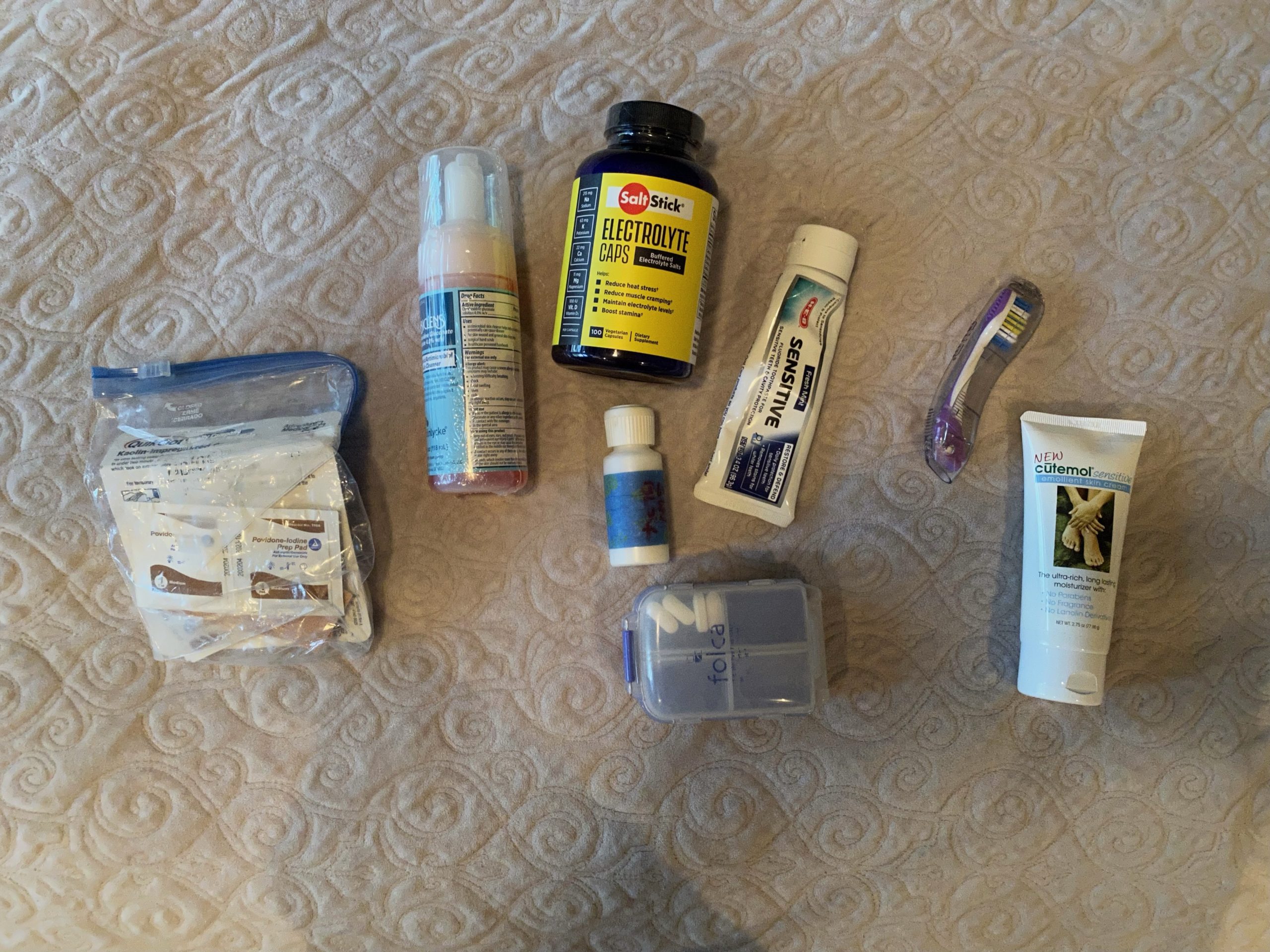
  • Minimal first-aid kit
  • Hibiclens
  • Electrolyte caps
  • Toothpaste
  • Toothbrush
  • Cutemol
  • Pill case for prescriptions
  • Sunblock

I had trouble with saddle sores in 2021, and am packing the Hibiclens and Cutemol in the hopes of preventing that. All this weighs 690 g.

Not shown:

  • Lip balm

Sleep setup

  • Sea to Summit Spark SP1 sleeping bag
  • Klymit Inertia 0 sleeping pad
  • SOL Escape Light emergency bivvy

I will probably sleep in hotels mostly, but don’t feel right not having something to sleep outdoors in. Weight of all this stuff: 870 g.

Total weight: 4,988 g. Plus the bags I’ll be carrying this stuff in.

The bags I’ll be using are:

Blister clear

I got involved in Burning Flipside and burns in general through firedancing. At the time I got started in firedancing there was a weekly firedancing get-together at Pato’s Tacos (RIP), and most of the people I met there were involved in Flipside.

My first Flipside was in 2004. Even before that, I got roped into coordinating the fire conclave. I overthought it and ran myself ragged during the event finding fire performers to take part. It turned out pretty good.

I skipped Flipside 2005, but returned to coordinating the conclave after that and continued doing it. One year some hoopers who were not using fire asked if they could be in it. I asked Pat, then a board member, and he left the decision to me. This was a small thing, but it taught me an important lesson about how Flipside works.

Over the years I continued to improve the way that I ran the conclave, and I took on other related responsibilities. I took over as a theme-camp lead. I helped run the informal secondary market for tickets. I joined Flipside’s advisory body. I helped organize a major art project.

It was in April 2012, during a work day for that art project, The Hive Project, that I got a call from Sparky, a then-serving board member, inviting me to go on a ride-along with a board member during the event, and to consider joining the board. I crumpled up on the floor but said OK. My reaction was both “why me?” and “if not me, who?”. I couldn’t expect other people to do it if I wasn’t willing to. I still argued that I felt I was contributing to Flipside without being a member of the board. I forget exactly what psychological aikido move Thomas used on me to counter that argument, but it worked. In the tradition of the microscopic culture that is Flipside’s board, two other invitees, Princes and Izzi, and I sat down with the board for beers at Scholz Beer Garden, to discuss joining them as provisional members. We all said yes.

The ride-along shift itself, with Beth, was uneventful and did not scare me off.

I had a severe case of imposter syndrome about the whole thing, but I also made a conscious decision that I was going to dedicate a big chunk of my life, my time, and my thoughts to my new role.

I continued serving as a provisional member until September or October 2012, when I signed the paperwork to become a full member.

Flipside 2013 would be my first event as a board member, which kicked my imposter syndrome up to a new level. I lost a huge amount of sleep in the month or so before the event, lying in bed and mentally working through scenarios. During the event, on the afternoon before burn night (when we’re all busy with burn-night prep), a massive pecan tree fell, while I was on shift. It didn’t hurt anyone, amazingly, and luckily there were experienced safety volunteers to manage that incident because I was not ready to (a tree collapse was not a scenario I had mentally rehearsed).

Over time my imposter syndrome ebbed, and I saw possibilities for improving the event that my role made possible. I focused in particular on improving documentation for the event. Old board members retired, new ones joined. Eventually no one who had been on the board when I joined, or who joined when I did, was left on the board.

Right at the beginning of 2020, I resolved to compete in the Trans Am Bike Race, and to focus on that, I would need to resign from Flipside’s board. We all know how that went. The TABR was cancelled in 2020. Flipside was cancelled in both 2020 and ’21. Because of those cancellations, I did not feel that the board could do an adequate job bringing new people on (no ride-alongs), and if I quit with no successors lined up, that would leave four on the board, which is not enough. So I stayed on. I did start TABR ’21, but had to abandon. But with Flipside 2022 in the books, we had four people lined up who were interested in joining the board. I wanted to take another stab at the TABR. And it was time to give other people a turn at the wheel. I gave plenty of notice and documented the things I did as a board member to smooth the transition. I set today as my last possible day.

On the Slack workspace that the organization uses for board members and senior managers, I announced that today was my last day as a board member. I had some powerful and complicated feelings after I sent that message. I’ve been doing this thing for over ten years, and it has taken over a big chunk of my life. I am glad I have something else to focus on, but it will be a strange feeling with nothing planned for Monday nights. Joining Flipside’s board has turned out to be one of the best things I’ve done with my life.

Later

I thought about when I moved back to the U.S. from Japan. I had somewhat similar feelings then. For one thing, I had put a lot of work into figuring out how to live in Tokyo, and I felt like I was throwing that investment away. I’m not feeling that way now. But being an American living abroad, being a Japan hand, had become part of my identity, and I felt like I was giving that up too, and I am feeling some of that this time. Being a board member for Flipside has become a significant part of my identity.

I also thought about something I’ve observed in some other volunteers that I call the Death Grip. You hold on to a role, not because you enjoy it, but because you’ve convinced yourself the role needs you–no one else can do it. I’ll admit I felt a pang of that, but I am letting go.

And of course, there’s the camaraderie that develops among board members. We spend a lot of time with each other. We have bonding through shared hardship.


PS: What’s up with cryptic title? My callsign on comms is “Blister”; “clear” is what you say when you’re ending a communication on comms.

Reflections on my anniversary

Gwen and I celebrated our 19th wedding anniversary with a weekend trip to Dallas. Nerd that I am, I reflected on an episode of Star Trek: The Next Generation that featured a character, Kamala, who became whatever the man around her wanted her to be. If she spent enough time in the presence of one man, she’d imprint on him, and would permanently be what that man wanted in a woman. One of the ideas suggested–but never spelled out–by this episode is that the way she expressed her own individuality is in the man she chose to imprint on.

And I thought about how, in marriage or any long-term relationship, we are changed by the person we are with. One partner will bring out one side of us, a different partner would bring out a different side. We consciously choose who we want to be with, but what I never thought about before is the fact that in doing so, we are also choosing who we want to be.

I did well on both counts.

Accessory mounting plates for aerobars

Updated–see end of post

I’ve written before about different options for mounting gadgets on aerobars. None of them really address the needs of bikepacking cyclists, who may want to have two sets of lights, two computers, and possibly other stuff out front, so I’m taking matters into my own hands and having a couple of designs fabbed up by SendCutSend.

Both designs use four lateral slots with P-clamps to attach to the aerobars with some positioning flexibility. I’ve found a source for high-quality, dimensionally precise P-clamps with silicone coating for a little vibration damping. Both designs require straight sections of aerobars to clamp to, and will work better on “J-bend” bars than “S-bend.”

Each design has its pros and cons.

The first one (“New York Style”) is being produced out of thin 6061 aluminum, but could be made of carbon fiber. It gives a little more room for different attachments, and might be a better basis for a single do-it-all mounting base.

The second (“Chicago Style”) is being produced out of .25″ 6061 aluminum (could get it as thick as 0.5″). This is thick enough to tap the holes, which obviates the need for separate nuts (or other fixtures). There are some limits on what SendCutSend can do–for instance, it can’t tap an M3 hole in a thicker plate than this. Because of the material’s inherent rigidity, the fore and aft slots can be closer together. This lets it fit on bars where there’s a relatively short straight section, which might make it feasible on S-bend bars.

Both designs provide a bunch of mounting holes for specific purposes. I’ve got one set of AMPS holes for installing a Quadlock mount. The New York Style plate has a few Garmin/Wahoo combo hole patterns, holes for mounting a bottle cage, and holes for GoPro bases–these serve as a sort of universal adapter for lots of gadgets. Many kinds of headlights can be used with a GoPro adapter; there are also Garmin/GoPro adapters, which give you control over the viewing angle. This particular iteration of the Chicago Style plate has fewer mounting options.

Update

I’ve received my first “New York style” prototype, mounted it, and taken it for a good test ride. The plate is 0.125″ 6061 aluminum and it feels much more solid in the hand than I expected. The plate by itself is 89 grams; with bar clamps, a Garmin mounting “biscuit” and a couple of GoPro mounts, 195 g. On a “grams per gadget” basis, this works out heavier than most out-front mounts, but not by a big factor. I’ve also received but not used my “Chicago style” prototype, and despite being twice as thick, the smaller footprint means it’s about 10 g lighter. A slightly longer center section would make it more functional.

The plate itself is a little rough around the edges, literally. The fabrication service I used doesn’t offer edge-chamfering. If they did, I’d use it. That said, unless you plan to spend a lot of time stroking its perimeter, this won’t be a problem.

It was absolutely solid and silent on my ride. Having received it and used it, I can see some ways to optimize it. It’s definitely overbuilt.

Interested in getting one of these? I am soliciting input for a small production batch..

A prototype of a plate for mounting accessories between aerobars

Shown with 2 headlights, a Quadlock phone mount, and a Garmin mount,

Shown with 2 headlights, a Quadlock phone mount, and a Garmin mount,

Shown with 2 headlights, a Quadlock phone mount, and a Garmin mount,

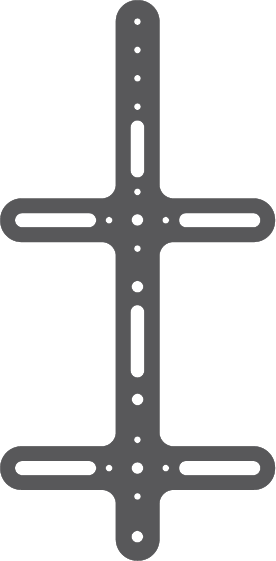
Finally, I’ve developed a variation on the “Chicago style” plate above that you might call “Chicago style with everything” — this has room for two Garmin 830s, a headlight, and a water bottle. Or skip the water bottle and add an undermount headlight. Or skip the Garmins and add a phone. This measures slightly less than 100 × 200 mm. This is realistically about as much will fit.

A design for an accessory mounting plate

Mastodon & moderation

I’m on the board of a regional burn, Burning Flipside. We have to deal with banning people and it’s the hardest, most time-consuming thing we do. There are some analogies to Mastodon bans and defederations that might be useful.

One illuminating difference is that our ban list is private: we treat it as very secret. But there are frequent suggestions that we should share our ban list with other regionals and accept ban lists from other regionals. And in fact, there’s at least one regional that proactively shares its banning decisions.

There’s a certain logic to this, because the populations of regional burns overlap a lot. People from one regional often go to others, including bad actors, and sometimes when a bad actor gets “run out of town,” he (it’s usually a he) moves on to another. So I understand why people would want shared ban lists.

But being notified of another org’s banning decision puts us in an awkward place: it creates pressure on us to respond to it somehow. But our own policies require firsthand reports, which one of these outside-org reports would not be, unless a member of that board is a firsthand reporter. And we might come to a different conclusion than the other org, which could be difficult to explain.

Why do we keep our ban decisions secret? Partly it’s out of liability concerns. We don’t want to be accused of libeling/slandering someone. Also, our decisions don’t always make sense out of context: we once had to “ban” a toddler who was at the center of a custody fight between two parents. Sometimes knowing who has been banned would convey information about who made the report to us in the first place, which we would want to avoid at all costs. Every decision is made in a unique context, and it would be impossible to apply standardized actions consistently.

There’s a difference in the kinds of problems Flipside needs to deal with vs a social-media content moderator. The interactions being reported often happen in private, and even if not, they don’t generally leave an objective record on the Internet. This is tough for me to think through. Speech acts are acts, and the Internet is part of real life. But still, there’s a big difference between being threatened online and being threatened in person, never mind being physically assaulted. The Flipside organization does have a policy not to tolerate “any form of expression that serves to demean, intimidate, or ostracize,” and we have seen some problematic forms of expression in the past, but we haven’t received reports about them since that policy has been in effect. The problems we’re dealing with are more immediate. In any case, I’m not sure how the differences in problems should inform differences in the ways they’re handled. It deserves some thought.

On Flipside’s board, we like to say “we don’t have a lot of options for dealing with problematic participants, and most of them look like hammers.” The Mastodon software offers a number of moderation features, some of which are more subtle than a hammer. As far as I can tell, Mastodon instances don’t publish lists of users under moderation, but in some cases, those users themselves will use another forum to announce that they’re under some kind of moderation.

Then there’s defederation, a way of one instance’s mods saying to another’s “if you won’t moderate your users, we will.” Best as I can tell, defederation is public. Perhaps necessarily so. The instance my first account is on shows which servers it has filtered/silenced/suspended—which is equivalent to applying that moderation to everyone on that instance, remotely.

Right now, it seems like a lot of defederation—or at least chatter about defederation—is happening either because an instance’s moderators have been too hasty or too relaxed about applying moderation. If an instance really has devolved into a hive of scum and villainy, then that’s fair. It’s the healthy thing for the fediverse to do. If it’s a few bad actors on a large instance, it strikes me as procrustean.

This is another way in which the difference between regional burns and Mastodon instances is illuminating. It would be impossible and undesirable for one regional burn to ban everyone from another regional burn.

I’ve got some ideas.

  • Fediverse mods need to have a running group chat, so that mods for Instance A can say to the mods at Instance B “I’ve noticed a pattern of problematic posts staying up/unproblematic posts being removed,” and they can talk it out before anyone needs to make a defederation decision. Maybe this already exists.
  • It seems likely that Mastodon admins are going to subscribe to external services that make moderation decisions for them. Keeping the lights on is hard enough, dealing with moderation decisions as well is a whole ‘nother ballgame. If this happens, then knowing what moderation service a Mastodon instance subscribes to will tell you something about what kind of place it is.
  • Sharing ban lists of individuals between instances, as an alternative to external moderation services, might remove some pressure to defederate, although this might be opening up a bigger can of worms.

Identity is going to be an important aspect of this, because it is possible to change instances, or use multiple instances at the same time. Mastodon provides an easy method to verify your identity, although it requires a bit of nerdiness. This can solve the problem of a public figure who wants to be identifiable but is an asshole. It doesn’t solve the problem of a committed troll, who can easily spool up multiple identities with multiple verifications.

Note: I’ve referred to Mastodon throughout this, but the same idea applies to any service in the fediverse.

Portugal 2022

Portugal 2022

Gwen and I had been talking about visiting Portugal for some time, and the time finally seemed right, so we booked tickets. We started language lessons in Duolingo, but A. Duolingo only teaches Brazilian Portuguese, and B. we didn’t realize how different the Brazilian dialect is from the European one. We watched some Youtube videos for European Portuguese instruction that were rather rude eye-openers as to how different. Still, the written language isn’t that different—certainly not at the rudimentary level that we’re at—and I do feel that I got some use out of those lessons.

I think that for lots of Americans (certainly lots of people in Texas), there’s a modicum of familiarity with how to sound out Spanish, just from familiarity with place names and Mexican-restaurant menus. In its written form, Portuguese looks a lot like Spanish, but those appearances will deceive you as soon as you speak it. Some things are the same, or near enough. Por favor. Ola. But we were in one neighborhood called Belém—based on a little knowledge of Spanish, you might expect that to be pronounced “bell-EM.” Nope. It sounds exactly like the English word “blame.” In English, we have silent Es at the end of words. In European Portuguese (not Brazilian), it seems any unaccented E is silent. I got self-conscious about using the Brazilian pronunciations that I had been learning. I was told while we were there “it’s OK, everyone will understand it.” The real problem is that I won’t understand the European pronunciations without a lot more practice. Anyhow, enough language talk. On to Portugal.

Monday

Landed in Lisboa and took a cab to Estação Oriente. We probably could have walked there faster when accounting for the line to get into a cab—it was quite close. Or we could have taken the subway. But we were tired and not trusting ourselves to navigate on foot or to figure out how to deal with the metro.

Bought our train tickets to Porto, after a French tourist cut in front of us to complain to the ticket agent that he needed to cash out his ticket. The ticket agent rolled his eyes and patiently shooed him to the side while he took care of us.

We had a bit of a wait for our train, so we wandered around the area near the station, eventually winding up on the waterfront and just sitting. All the sidewalks in Lisbon and Porto are cobbled, so dragging a rolly bag is not super-fun.

The train ride was uneventful. Took another cab (our last of the trip) from the Campanha train station to our Airbnb in the Ribeira area. Ribeira is an old part of town, with very narrow streets and buildings overhanging, which impairs GPS performance. Our driver wound up on the wrong street, and couldn’t quite figure out how to get us to where we belonged, but we managed. The driving was very treacherous—neither Gwen nor I could imagine driving in that part of town at all.

The Airbnb was pretty nice. It was in a very old building that seemingly had been completely gutted and rebuilt—new floors and everything. Our unit had a sleek, small system kitchen and fancy fixtures. The original stone walls were exposed, and the windows set deep into them, showing how thick they are—about 18″.

Once we got settled, it was time to think about dinner. We wound up at a place just down the street, Mariage a Trois. This was not really a place to go for a hot meal—it was mostly wine and charcuterie boards. But the owner was interesting, and had interesting wines to offer for €4-5. It wound up being a good time. I’ll tell you what, when you order an adult beverage in Portugal, you do not get a short pour. On a later occasion, we stopped in a place selling shots of ginjinha (cherry liqueur), and the glass was so full it was only surface tension keeping it all in.

Tuesday, 27 Sep 2022: Porto

This was a huge walking day. Too much walking. (Gwen messed up her IT band for the rest of the trip.) It was good to get the lay of the land.

The old part of Porto is extremely hilly and twisty and turny. Especially down by the riverfront, it feels like you could get lost in an area the size of a large vegetable garden. Some of the streets are probably at a 20% grade, and they’re all cobbled. Many of the smaller ones had access limited by motorized bollards that you need a special pass to retract.

The old part of town inevitably has a layer of grime over everything. If Porto collectively powerwashed itself, it would be breathtaking.

Breakfast: Com Cuore. GF bakery. Not bad for GF.

We had been told by friends that you barely need cash in Portugal—that everything is done on plastic. Yes and no. This place only took cash, and there were quite a few like that in Porto (signs often say “No multibanco” or “No ATM”). We had changed a fair amount of currency before the trip, and it was a good thing. In Lisboa, though, we found a lot of places that could not or would not take €50 notes, and we wound up bringing home more cash than was ideal. Almost every place we went had the same little handheld payment terminals, and for the first time on this trip, I embraced the Apple Pay feature on my watch. Super-fast, super-convenient. The only drawback is that I have two cards registered to Apple Pay that are indistinguishable except for the account numbers, and I have not bothered to memorize which is which. I decided to go with whichever card it was defaulting to and fix it after the fact.

Highlights: Livraria Lello. This place bills itself as “the world’s most beautiful bookstore,” and it’s a credible claim. They charge admission (applied toward book purchases) just to get in, and there’s a line. We were lucky to go on a weekday—the line on Saturday was ludicrous. Buy your tickets online before you get there.

We walked to the printing museum—which was a long hike along the waterfront—only to discover that it was closed indefinitely [sad trombone].

Dinner: Adega Mercearia Bebe Se Mal (“bebe se mal” means “drinking is bad,” but we drank anyhow). This was a traditional Portuguese place, meaning fish and potatoes without fancy preparation. The fish is the real deal. They had a whole section of cod dishes. Gwen had salt-crusted grilled sardines and was quite satisfied with the meal.

  • Distance walked: 11 miles
  • Flights climbed: 76

Wednesday, 28 Sep 2022: Porto

We had breakfast at Floresta Cafe, in the heart of the touristy area. Oh my god, so much food. I had their “Brunch #1” and didn’t eat for the rest of the day. Porto restaurants in general seem to take an idea and run with it beyond all reason—my breakfast was a reasonable approximation of a Full English breakfast, but with a salad added. And yogurt with granola.

Our first stop of the day was Igreja de São Francisco, which Atlas Obscura referred to as a “baroque orgy.” Accurate enough. Your eyes would fall out trying to take in all the detail, most of it covered in gold leaf.

After that, because it was threatening rain, we went next door to the Palácio da Bolsa—the old stock exchange. One could only visit as part of a scheduled tour (it’s still a functioning workplace), but fortunately they had an English-language tour starting a few minutes after we arrived. It was a pretty amazing building and I’m glad we had the excuse to visit—I probably wouldn’t have gone otherwise.

I noticed that Porto has designated mandatory parking spots for rental scooters. I wish that Austin (and every other city) would follow this example. It’s not technologically difficult, and it could be a source of revenue for the city.

The public-transit systems in Porto and Lisboa both are not hard to navigate. You buy a fare card, and can either add a certain monetary value to it or make it a day pass (you can also just put a single ride on it, but that seems inefficient). Once you’ve done that, it’s good for subways, trams, buses, and trains (although a Porto pass will not work in Lisboa or vice-versa). I was a little surprised that, on the Lisboa subway, you need to tap in and tap out. Porto was interesting for being very laissez-faire: on the subway, there are tap-in pillars, but there’s nothing restricting access to the platforms. Perhaps they reason that the barriers cost more money than the additional fare capture would bring in. Although the buses and subways in Porto both have electronic signs showing what stop is next, the trams do not, so you need to watch your progress on your phone or count stops carefully.

Both Google Maps and Apple Maps give public-transit routing for Lisboa, but only Google does for Porto; interestingly, they don’t always agree with each other. For walking directions, I found that I liked Apple Maps better: the map is easier to read on the phone, and seems to show your heading based on the phone’s internal compass, while Google Maps seems to show your heading based on the direction you’ve been walking in, so it can take a few seconds to catch up with changes in direction. On the streets over there, that makes a big difference. Also, if you have an Apple Watch (I do), Apple Maps will tap your wrist to indicate when it’s time to turn left or right, so don’t need to walk with your phone out like a damned tourist. I’m surprised the Google Maps watch app doesn’t do anything like that—it is useless.

One thing neither one did well is guide you on foot to your public-transit stop, or from a stop to your destination. They assume that you’ll know the area well enough, which is not a safe assumption.

  • Distance walked: 8 miles
  • Flights climbed: 35

Thursday, 29 Sep 2002: Porto

Our first stop of the day was in Gaia on the other side of the Douro river, so we crossed over there and found a breakfast place, 7G Roaster. This place incidentally also has short-term rentals for €83/day, which is not bad. The breakfast kept with the “massive overkill” theme of Porto restaurants: I had a bagel with lox, to which they had added a poached egg and a big scoop of guacamole. It wasn’t an authentic bagel—more like a ring-shaped bun. But it was pretty good! Gwen had eggs florentine on a hashbrown patty, again not authentic but tasty.

That first stop was a tour of a small port vintner, Quinta dos Corvus. Small enough that they don’t export. All the port vintners run these tours, and of course, the best part is the tasting room at the end. They served us a white port and a tawny for the price of our ticket, and we bought a glass of vintage ’96. I like port.

We made our way back to the Porto side and visited a couple of graveyards: Lapa cemetery and Cemitério do Prado do Repouso. We didn’t have enough time to really take in the second one (which is huge). We noticed that the cemeteries had signs indicating that there were feral cat colonies living in them, and that the cats had all been fixed and an ear clipped to indicate that.

We had dinner with our ex-Austin friend Echo and her husband João. João took us to Taberna do São Pedro, an old-school fish restaurant in Gaia, and after that we walked along the waterfront for a while. It was great to see Echo again, and to meet João. Initially they tried to take us to a place that Echo just referred to as “the meat place,” but they were booked solid with reservations. Gwen and I made a note of its name and location and resolved to try again—it smelled amazing.

  • Distance walked: 8 miles
  • Flights climbed: 18

Friday, 30 Sep 2022: Matosinhos

For breakfast, we went to Swallow Decadent Brunch. Who could pass up a place with a name like that? Gwen said it was overpriced, but I thought it was a decent value. Good food, and another overkill breakfast. Pancakes, eggs, bacon, potatoes, fruit.

We took a streetcar to the nearby beach town of Matosinhos to spend the day. Walked along the beach for a while. I know that Portugal is supposed to have good surfing, and indeed, we did see some guys taking a surfing lesson there. We stopped in a market and made the rounds, picking up a croissant and a loaf of bread, and a few pieces of fruit. The greengrocer had huge, red persimmons. We bought one and ate it just outside, and then had to go back in to clean ourselves up because it was so messy. But good. After a lot of reading about people with gluten intolerance Gwen decided it was time to experiment and enjoyed her first bit of croissant in 11+ years. Then we walked down the main drag, which felt a bit old and frumpy, before returning to Porto.

For dinner, we had reservations at A Despensa. This was a bit of a splurge, but it was worth it. Excellent food.

It was Friday night, and for the first time we saw that Porto does seem to have some nightlife (not that Gwen and I are party-all-night clubgoers). I also noted with interest that even young women dressed for a night on the town mostly wear very practical shoes—Chuck Taylors seem to be a favorite. I wonder if the rubber compound on the sole grips cobbles especially well. Considering how treacherous the streets are, this is probably just a basic survival adaptation, but practicality doesn’t always get in the way of fashion. I kept half an eye out after this and saw very few women in heels, and not preposterous ones at that.

  • Distance walked: 8.5 miles
  • Flights climbed: 32

Saturday, 1 Oct 2022: Porto

For lunch, we made our way back to the “meat place”, Stramuntana, and discovered that they were fully booked with reservations even just for lunch. But upon learning that we were from the U.S., the maitre-d moved some things around and seated us. The place seems like it’s mostly popular with locals—only one English-speaking waiter—and it’s one of the few places we went that had the kind of service we’d read is typical in Portugal, where they just start bringing food and you send back what you don’t want. The place had a single menu, written on a small chalkboard, that the waiter brought around. We had entrecôte of beef for two, served with soupy rice and homemade potato chips. Appetizers were olives, cheese, bread, a simmered pork dish called rojões that was amazing (we looked up recipes, and we don’t think this was a typical preparation), and some kind of codfish fritter. A memorable meal. We were seated on the balcony and a little tortoiseshell cat came around—the only friendly cat we encountered in Portugal—begging for table scraps. There was also a small animal pen just over the balcony wall with a tiny goat, a muscovy duck, and possibly other livestock.

We also visited the Cemitério de Agramonte. And took in “the world’s most beautiful McDonalds.”

  • Distance walked: 8 miles
  • Flights climbed: 22

Sunday, 2 Oct 2022: Transit

We took the train back from Porto to Lisboa. When we arrived at the train station in Porto, there was a get-together for the local air-cooled VW enthusiasts, and we had a few spare minutes to ogle their cars. Two or three were old enough that they used semaphore turning signals, and they all seemed to be in great shape—not garage queens, but regularly used and carefully maintained.

Our train wound up being delayed en route by a jumper on the line. Our Airbnb host in Lisboa had to hand off the keys in person, and I suspect this threw a wrench in his own plans, but he was nothing but gracious and friendly when we arrived.

The place we were staying was…kind of weird. Very small, very low ceilings, weirdly chopped-up spaces. I halfway suspect that it had been an outdoor area that was recently enclosed. The neighborhood was rough and did not show Lisboa in its best light. A lot of trash. The most direct route to the apartment took us up a staircase, which would obviously be a hard place to collect trash, and indeed, there was a lot of trash on it. Even at designated collection points, there was a lot of trash not getting picked up. Cigarette butts and dogshit everywhere.

But there was also a public square nearby with a few restaurants, and we wound up eating at three of them and enjoying all of them. On this day, we went to a place that seemingly had only outdoor seating called Joana’s. Nothing special.

We went to the neighborhood grocery store and picked up a few things to have in the apartment. Going to grocery stores in foreign countries is always interesting, and this was no exception. It was a small store—maybe 2000 sqft. One of the things we found (and that Gwen bought) was tiny tins of sardine paste.

  • Distance walked: 4 miles
  • Flights climbed: 16

Monday, 3 Oct 2022: Lisboa

We hit the Castelo São Jorge, a massive, ancient complex looking out over the city. In its vicinity, we also stopped in an antique store that had a lot of old Catholic kitsch, but Gwen was especially taken with tiny clay figures that resemble some netsuke I’ve inherited. We made a note of the place’s location.

For dinner, Gwen wanted pizza. She’s been gluten-free for about 11 years, but there’s anecdotal evidence that a lot of Americans with non-celiac gluten sensitivity are not reacting to gluten per se, but to something else, and whatever that something else is, it isn’t present in European wheat. So these people can consume gluten in Europe. With that in mind, Gwen experimented with eating wheat on this trip, and when that worked out ok, she dove in.

Unfortunately, we were thwarted our attempts at finding pizza. One place we tried was no longer a pizzaria. Another was just a take-out place. And so on. Eventually we wound up at a neighborhood place, Maria Food Hub, that was pretty good but nothing special. No pizza.

  • Distance walked: 8.5 miles
  • Flights climbed: 19

Tuesday, 4 Oct 2022: Lisboa

We started with the flea market, which is held Tuesdays and Saturdays. It’s huge. It just…keeps…going. There’s a lot of crap, as one might expect. Probably six vendors all selling the same hippie wear made in Guatemala and India. But there were a few interesting vendors. I got a kick out of one guy selling lobby cards for 70s-era porno films. Gwen found a pair of square hoop earrings, something she’s been seeking for about twenty years in case she loses the pair she’s been wearing…for twenty years.

We went out to LX Factory, a funky commercial development in a disused industrial sector, where we found a record store called Jazz Messengers in what had been a printing press (the press equipment was still present, clearly more expensive to move than it was worth). It happened to be the 40th anniversary of the sale of the first compact disc, so to commemorate, I bought a few.

Our next stop was the National Coach Museum. This is a museum of horse-drawn carriages. Fancy ones used by royalty in particular. I’ve decided these were the original art cars. They were pretty amazing: as nerdy as this sounds, it was a lot to take in.

For a late lunch, we stopped at Time Out Market, a giant food court, where we finally got that pizza, as well as some pastries. For dinner, we went to a place on the neighborhood square, Josephine’s, where I had a ridiculous cheeseburger with a fried egg on it.

  • Distance walked: 8 miles
  • Flights climbed: 34

Wednesday, 5 Oct 2022: Lisboa

We started with the Decorative Arts Museum today. This was another museum you can only see by guided tour, which was a little odd, because it was clearly set up for free-range visitors. When we got there, we were informed that a tour had started six minutes before, but we could join it. But there were no other visitors in the museum at all, so we hadn’t missed anything. We kind of felt hustled through this place—we could have easily spent more time there.

Everyone said we should check out the Santa Justa lift for its incredible neo-Gothic architecture. It was a really gorgeous structure, though the line to go up was ridiculously long. We walked up the hill to the top, great view of the city. Cafe Brasilero was in the neighborhood so we peeked in but didn’t feel like joining the throngs there.

At some point we found ourselves back at that antique place, so we stopped in and Gwen bought those clay figures.

Next, to the Calouste Gulbenkian Museum. This is situated in an extensive park with a meandering path through it—we actually had a hard time finding the entrance because we were approaching from the wrong direction. But there’s so little greenery in the cores of either Porto or Lisboa that without realizing it, I was really missing it, and spending just a little time in that environment recharged my batteries. The way that park is laid out, there are numerous little semi-private diverticulations with benches along the path, so numerous people could have small get-togethers and feel like they’ve got a bit of park to themselves. There are also broad open areas that were getting a lot of use. The whole place seems like an important asset for city-dwellers.

There are two exhibition spaces on the grounds (and it looks like they’re building a third), one for modern art and one for not; we went to see the not modern art. It was an idiosyncratic collection of ancient devotional Christian and Islamic art, Chinese porcelain, Japanese inro, Baroque-era paintings and sculpture, a large decorative-arts section, and a really stunning Lalique exhibition.

Both of these museums started out as a rich guy’s art collection, sort of like the Barnes Collection in Philadelphia.

The train stop for the Gulbenkian was right across from a place Gwen had wanted to try called Rice Me Deli, as well as an El Corte Ingles department store, so we after the Gulbenkian, we stopped for a snack at Rice Me, and then to Corte Ingles to explore a bit. Gwen tried on some shoes, and we went to the basement grocery store which was big and full of stuff. Picked up a few things to bring home.

For dinner, we went to a semi-fancy place on the neighborhood square called Infame. It was really good. We had a duck and rice dish and felt like the Portugese while known for their fish most definitely know how to cook meat!

  • Distance walked: 7.5 miles
  • Flights climbed: 25

Thursday, 6 Oct 2022: Sintra

Sintra is about half an hour outside Lisboa, and has the feeling of a mountain town originally developed as a playground for the rich. That said, it has been inhabited since your ancestors’ knuckles were dragging, and was recognized by Caesar around 49 B.C., so there’s some history there. It’s difficult to visit except as part of an organized tour, so that’s what we did, despite our general suspicion of such things. The town is now very tourism-oriented and very full of tourists, even during the off-season.

The tour we went on took us to two locations: Palácio Nacional de Pena and Quinta da Regaleira. Pena Palace was a retreat for the monarch, and Quinta da Regaleira was built at the beginning of the 20th century by a rich guy. In both cases, the builders didn’t miss any opportunity for ornament. Both places were kind of whimsical and weird, and although we didn’t get a chance to visit any other places in Sintra, from what we saw in passing, there were more examples of the same. I had not been especially interested in going to Sintra beforehand, but was really glad we did.

For our last night in Lisbon, we found a random typical Portuguese place. Gwen had grilled sardines again (these are much bigger than the sardines you’re imagining), I had some kind of pork dish. This was one of the few places we had to interact using only our limited Portuguese.

  • Distance walked: 9 miles
  • Flights climbed: 20

Friday, 7 Oct 2022: Transit

The advice to travellers that we found told us we should get to Lisboa’s airport four hours before our flight, which sounds crazy, but we didn’t want to risk anything, so we did. Once we got there, we found that it was noisy and hectic but pretty efficient, and in fact four hours was way more time than we needed. International travel is all about herding passengers through a series of controls, and those controls are different in different countries. This being our first time departing Portugal, we didn’t really know what to expect. In this case, we went through a ticket check fairly early, and then were perplexed when it wasn’t obvious where we should go next—the next thing in our path was a huge duty-free shop. Eventually we realized we had to run the DFS gauntlet to continue. I’ve never seen retailing quite so aggressive as that.

We made it to passport control, and there were separate lines for passports with embedded RFID chips (basically any new-ish passport), which are much shorter.

Once we located our gate, we worked our way back to a restaurant and had coffee. We found ourselves seated next to a couple of Spanish guys who were totally fucking plowed and having a great time. This was at about 10 AM, mind you. On our way back to the gate, we walked by the airport outlet of O Mundo Fantástico das Conservas Portugesa. This is a chain of tinned-sardine shops that have a carnival theme—you’d expect them to be selling candy based on appearances. They had an instagram-bait throne, so of course I took Gwen’s picture on it.

After we got seated near the gate, they shooed us all out of the gate area, put up a cordon, and had us go through another passport check in order to get back into the gate area. I’m guessing this was a US government requirement.

Scroll to Top