Masha

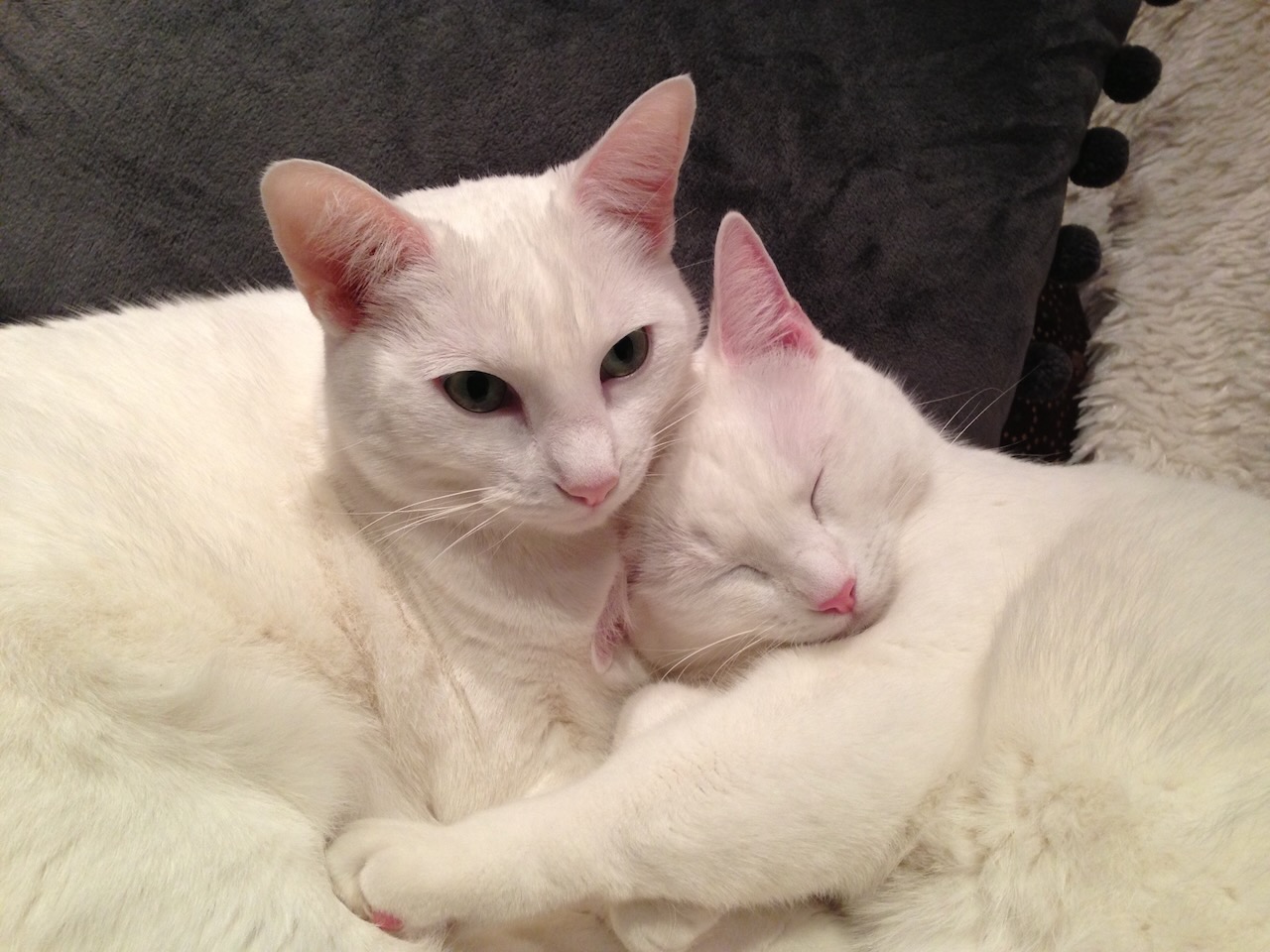
We adopted Masha and her sister Bubka in November of 2008, when they were both about three months old. Gwen and I each brought our own cats to the relationship, but these were the first cats we adopted as a couple. They had both been separated from their mother before they were weaned, and as a result, had permanently infantilized behaviors: in Masha’s case, that meant that she liked to suckle on your armpit—mostly on Gwen’s armpit. She had a voracious appetite, and would nose other cats away from their food bowls. She didn’t particularly like sitting on people’s laps, but she had a morning ritual where she would jump up on the rim of our bathroom sink for what I thought of as her “daily adoration.” She would always seek out a beam of sunlight to warm herself in. She always seemed happy.

She spent most of her life living with a chronic health condition: cholangeo-hepatitis, inflammation of the gall bladder and liver. This resulted in a couple of serious health scares before we had it correctly diagnosed and treated. We followed the vet who diagnosed her from one practice to another to another. A couple of years ago, her blood sugar seemed to indicate that she’d also developed diabetes, but we were able to control that with diet. More recently we needed to increase the dose of one of the drugs we gave her. And she was becoming less mobile, so the daily adoration could not take place on the sink.

On Sunday, her normally robust appetite deserted her. She’d had low spells before and bounced back after a few days. This time, Gwen took her to the vet, and the vet just gave Masha a look, and gave Gwen a look. Diagnosis: multiple organ failure. Our vet had previously marveled that Masha seemed unstoppable—she’d have one problem after another and keep going. But in the end, the best we could do for her was not good enough. In the end, it never is.

The Kingdom of Paper

I have been helping my sisters clear out my parents’ old place, and I’ve been dealing with paper. I’ve got three piles going: recycle, shred, keep. The shred pile—anything with personally identifying information—currently comprises about 14 banker boxes. One of my sisters has been hauling away the recycling pile as we go, so I have not fully appreciated its majesty, but it may be about as big. The keep pile is a box and a half. My parents kept every piece of paper that ever entered their lives; they generated paper whenever they had to add up a column of numbers—and then kept that piece of paper, devoid of context. My mom printed every piece of e-mail that seemed like it might be useful someday. Of course, when you print everything that might be important, you guarantee you’ll never be able to find anything without a very labor-intensive filing system, which she didn’t have. Among the papers that I ran across today: at some point, my mom logged into Apple’s website to set up a support call; this led her to a confirmation screen showing that her call was scheduled, with a session ID. She printed that confirmation screen—the most ephemeral thing in the world.

In her book In the Age of the Smart Machine, Shoshana Zuboff wrote about clerical workers at an insurance company around the time the company switched to computerized records. These workers continued to refer to paper files because the computerized information wasn’t “real” to them. Those people were probably from about the same generation as my parents, which I think explains my parents’ relationship with paper somewhat. I’m the opposite—if I print something, it’s because I need it in paper form temporarily, and the electronic version is the canonical, permanent one.

Some of the old paperwork is interesting to consider from our current perspective.

Here’s my father’s old Rolodex. I’ve pulled all but one of the cards out to put in the shred pile. The Rolodex was so dominant that businesses would print their cards on stock with slots to fit on the Rolodex’ rails, and in the case shown here, sometimes had a little tab to get your attention, shouldering aside all those other cards.

Here’s a “home expense record” from 1966. This is basically a paper spreadsheet from the days before spreadsheets. The monthly-record pages are laid out with useful categories, with spaces for budgets and actuals, and each page is a pocket for storing old receipts. At the back is more pages to summarize the year and plan taxes. It’s all well-considered.

I especially like the category for “Miscellaneous expenses: Tobacco – Cosmetics – Beverages – Liquor
Confections – Etc.”

I found so, so many letters, thoughtfully composed and meticulously typed (often by a secretary). It’s a different form of communication that we have all but lost.

Accretory debt

There’s a concept from the world of software development called “technical debt”—basically, that code you write today needs to be maintained in the future, and the jankier your code is today, the harder it will be to maintain in the future.

There’s an analog to this in the tangible world. Call it accretory debt.

I’m helping clear out my parents’ home. My sisters have done the vast majority of the work if for no other reason than proximity, but I’m spending my xmas break catching up a little. My parents accreted a lot of stuff. I wouldn’t call it hoarding, exactly, but it’s not far off. There’s a lot of good stuff as well as a lot of stuff that just…never got dealt with. I found tax returns from 1997. My 2nd grade report card. The last of my mother’s baby teeth. My grandfather’s college diploma. There’s going to be an estate sale to try to sell the good stuff, although there’s so much in it that we tend to devalue everything that’s not obviously valuable, and there’s not enough room to display even the stuff that is obviously valuable. Surveying all the stuff is demoralizing, and we keep finding more.

Some of this stuff has been stored for the last 35+ years in the dank basement of the rambling house my parents moved into when I was in college, where it has rotted and/or been chewed on by mice. Now we need to haul it all up stairs, rent a roll-off, have a scrapper come out, have a shredding service come out, etc. Failing to deal with that stuff in a timely manner has inflicted a debt on the future.

Blister clear

I got involved in Burning Flipside and burns in general through firedancing. At the time I got started in firedancing there was a weekly firedancing get-together at Pato’s Tacos (RIP), and most of the people I met there were involved in Flipside.

My first Flipside was in 2004. Even before that, I got roped into coordinating the fire conclave. I overthought it and ran myself ragged during the event finding fire performers to take part. It turned out pretty good.

I skipped Flipside 2005, but returned to coordinating the conclave after that and continued doing it. One year some hoopers who were not using fire asked if they could be in it. I asked Pat, then a board member, and he left the decision to me. This was a small thing, but it taught me an important lesson about how Flipside works.

Over the years I continued to improve the way that I ran the conclave, and I took on other related responsibilities. I took over as a theme-camp lead. I helped run the informal secondary market for tickets. I joined Flipside’s advisory body. I helped organize a major art project.

It was in April 2012, during a work day for that art project, The Hive Project, that I got a call from Sparky, a then-serving board member, inviting me to go on a ride-along with a board member during the event, and to consider joining the board. I crumpled up on the floor but said OK. My reaction was both “why me?” and “if not me, who?”. I couldn’t expect other people to do it if I wasn’t willing to. I still argued that I felt I was contributing to Flipside without being a member of the board. I forget exactly what psychological aikido move Thomas used on me to counter that argument, but it worked. In the tradition of the microscopic culture that is Flipside’s board, two other invitees, Princes and Izzi, and I sat down with the board for beers at Scholz Beer Garden, to discuss joining them as provisional members. We all said yes.

The ride-along shift itself, with Beth, was uneventful and did not scare me off.

I had a severe case of imposter syndrome about the whole thing, but I also made a conscious decision that I was going to dedicate a big chunk of my life, my time, and my thoughts to my new role.

I continued serving as a provisional member until September or October 2012, when I signed the paperwork to become a full member.

Flipside 2013 would be my first event as a board member, which kicked my imposter syndrome up to a new level. I lost a huge amount of sleep in the month or so before the event, lying in bed and mentally working through scenarios. During the event, on the afternoon before burn night (when we’re all busy with burn-night prep), a massive pecan tree fell, while I was on shift. It didn’t hurt anyone, amazingly, and luckily there were experienced safety volunteers to manage that incident because I was not ready to (a tree collapse was not a scenario I had mentally rehearsed).

Over time my imposter syndrome ebbed, and I saw possibilities for improving the event that my role made possible. I focused in particular on improving documentation for the event. Old board members retired, new ones joined. Eventually no one who had been on the board when I joined, or who joined when I did, was left on the board.

Right at the beginning of 2020, I resolved to compete in the Trans Am Bike Race, and to focus on that, I would need to resign from Flipside’s board. We all know how that went. The TABR was cancelled in 2020. Flipside was cancelled in both 2020 and ’21. Because of those cancellations, I did not feel that the board could do an adequate job bringing new people on (no ride-alongs), and if I quit with no successors lined up, that would leave four on the board, which is not enough. So I stayed on. I did start TABR ’21, but had to abandon. But with Flipside 2022 in the books, we had four people lined up who were interested in joining the board. I wanted to take another stab at the TABR. And it was time to give other people a turn at the wheel. I gave plenty of notice and documented the things I did as a board member to smooth the transition. I set today as my last possible day.

On the Slack workspace that the organization uses for board members and senior managers, I announced that today was my last day as a board member. I had some powerful and complicated feelings after I sent that message. I’ve been doing this thing for over ten years, and it has taken over a big chunk of my life. I am glad I have something else to focus on, but it will be a strange feeling with nothing planned for Monday nights. Joining Flipside’s board has turned out to be one of the best things I’ve done with my life.

Later

I thought about when I moved back to the U.S. from Japan. I had somewhat similar feelings then. For one thing, I had put a lot of work into figuring out how to live in Tokyo, and I felt like I was throwing that investment away. I’m not feeling that way now. But being an American living abroad, being a Japan hand, had become part of my identity, and I felt like I was giving that up too, and I am feeling some of that this time. Being a board member for Flipside has become a significant part of my identity.

I also thought about something I’ve observed in some other volunteers that I call the Death Grip. You hold on to a role, not because you enjoy it, but because you’ve convinced yourself the role needs you–no one else can do it. I’ll admit I felt a pang of that, but I am letting go.

And of course, there’s the camaraderie that develops among board members. We spend a lot of time with each other. We have bonding through shared hardship.


PS: What’s up with cryptic title? My callsign on comms is “Blister”; “clear” is what you say when you’re ending a communication on comms.

Reflections on my anniversary

Gwen and I celebrated our 19th wedding anniversary with a weekend trip to Dallas. Nerd that I am, I reflected on an episode of Star Trek: The Next Generation that featured a character, Kamala, who became whatever the man around her wanted her to be. If she spent enough time in the presence of one man, she’d imprint on him, and would permanently be what that man wanted in a woman. One of the ideas suggested–but never spelled out–by this episode is that the way she expressed her own individuality is in the man she chose to imprint on.

And I thought about how, in marriage or any long-term relationship, we are changed by the person we are with. One partner will bring out one side of us, a different partner would bring out a different side. We consciously choose who we want to be with, but what I never thought about before is the fact that in doing so, we are also choosing who we want to be.

I did well on both counts.

Bubka

Bubka and Masha

Gwen and I adopted Bubka (left) and her sister Masha in November 2008, when they were about three months old. When Gwen and I got together, she had two cats and I had one; by the time we adopted the girls, old age had taken two of our old cats and the surviving cat, Kevin, was lonely.

On our way to the cat-rescue place, Gwen said, “I don’t want to get a kitten.” We wound up with two. They were both so easygoing and affectionate it seems inevitable in hindsight. We named Bubka after the famous Ukrainian pole-vaulter, Sergey Bubka, because she was such an energetic jumper when she was little. She grew out of that eventually and became mostly placid.

Bubka took to Kevin immediately. He was initially stand-offish toward both the new kids, but she wore him down after just a few days, and her companionship made his remaining years much happier.

Because they looked so much alike, it was hard to tell them apart at a glance, and we took to calling both Masha and Bubka “kitten,” especially when they were being naughty. And because they were separated from their mother before they were weaned, they continued to exhibit kittenish behavior all their lives. We never stopped calling either of them “kitten.”

Gwen insists I was Bubka’s favorite person, and she’s probably right. She would jump up on the bed in the morning and swat at my nose or bite my ear to get my attention. Once I was up, she would insist on being carried around for a few minutes. If Gwen and I were watching TV from the couch, she’d often be perched on the back cushion behind my head.

Bubka had been diagnosed with kidney disease years ago, but her condition had been stable up until about March, when she had a health crisis. She spent a few days at the vet and we learned that her kidney function had declined suddenly. We managed her health aggressively with drugs and subcutaneous fluids we administered at home, but we knew her condition was only going to get worse. For a while, it seemed she was getting worse very gradually, but by the time it was ready for us to go to Flipside, we could tell her decline was accelerating. On the Saturday of Flipside, Gwen came home, and the day after, I returned for the day so that we could euthanize her. It was clear the moment I saw her that it was time. She was very weak—she couldn’t walk more than a few steps at once. She had no interest in food. Her meow was all wrong. Her life wasn’t as long as it should have been, but it was the best possible version of her life.

Masha and Bubka were inseparable, cuddling together or tussling in what we called “pillow fights” due to their well-cushioned physiques. I have no idea how Masha will cope with her sister’s absence, but she had been avoiding Bubka as she declined over the past couple of months, perhaps out of some instinct to avoid disease.

Gwen and I are both wrecked. We’ve had a fair amount of practice with this. It never gets easier. I’ve been thinking about grief a lot, and why it is that we feel it so intensely with the death of a pet. I don’t know that I have the answer, but maybe it’s this: we’re responsible for everything in the lives of our pets. We make all the decisions, and want all of those decisions to be in their best interests. In this respect, they’re like children. But unlike children, we generally outlive them, and when the time comes to make the last decision—to euthanize them—there is no option that doesn’t feel like a betrayal. They’re constant presences in our lives for a long time, and love us uncritically, and when the end comes, there’s nothing we can do for them.

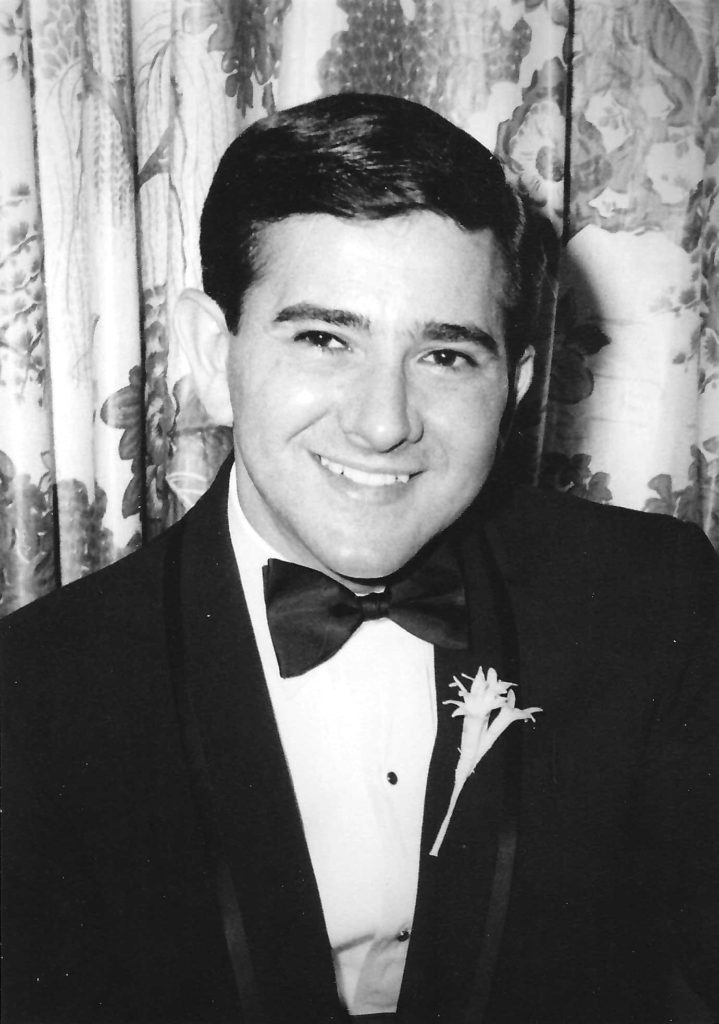
David Rice, 1935–2022

David Rice at wedding

My dad died yesterday. He’d had a number of health problems over the past year or so, and had declined considerably. The last 10 days of his life were spent in hospice, doped up and dreaming restlessly. It is not how he wanted to go, and I’ve been very upset about that. I had time to grieve him while he was still alive, and now his death is more of a relief.

I always had a good relationship with him, but in some ways I feel like I didn’t know him very well. He never spoke about his interior life. He occasionally revealed tidbits about his life as a child and young man, but these paint a very fragmentary picture.

But I do feel like I knew him on an intuitive level—what was important to him, how he’d react to things. And I know that in a thousand ways I’m not even conscious of myself, I am a lot like him. Gwen sometimes stops me when I say something and tells me that what I just said was exactly what he would say, as he would say it.

In the last few days of my dad’s mother’s life, I said something like “she can’t die, she’s a force of nature,” and he agreed. I’m feeling that way again—it’s as if I’ve had a view of a mountain out my window every day of my life, and that mountain has disappeared. It’s disorienting. It affronts my sense of how the world works. I’ll have to get used to it.

I’ll revisit this post and fill it in as ideas come to me.

900 miles

At the end of July, I had a routine doctor’s visit. Got on the scale. Clocked in at 170 lb. I hadn’t weighed that much since 1991. So I got back on my bike.

I still remember when I was six years old and my father took the training wheels off my bike and convinced me to ride it. I was terrified. He ran alongside me as I rode around the block. (My little sister, in contrast, took her training wheels off by herself, leaned her bike against our father’s truck, climbed aboard, and rode off.)

After that I got the hang of it, and bikes became an important part of my life. I started going on long-distance rides when I was 13. I did a little bike touring in high school, and I competed in some triathlons and bike races starting right after I graduated high school.

I didn’t have a bike during the time I lived in Japan, and when I was living in Chicago for a couple of years after that, I had my road bike but didn’t use it much (thus the 170 lb).

After I moved back to Austin in 1992, I got back into riding, and it was a great time to be a road cyclist in Austin—there were a bunch of then-pointless and unused roads that were like a playground for cyclists—360, Southwest Parkway, Bee Cave, and so on. I hardened up and could motor all day. On one occasion, I rode the 165 miles to a friend’s place in Houston in 9 hours flat. Some months later, I did it again, 20 minutes faster.

In 2000, a lot of stuff in my life changed, and I found myself cycling less and less, but in 2010, I started riding regularly again as I prepared for my Southern Tier ride, which I completed in October that year.

But that wrecked me—my upper body was emaciated when I finished. I remember at the end of the ride struggling to lift my 30-lb bike over my head. I decided I needed some kind of a whole-body workout. I signed up for a bootcamp class, and stuck with it until it petered out several years later. I never found a replacement that interested me, so I was back to a relatively inactive lifestyle (thus the 170 lb).

As of today, I’ve logged 900 miles since that doctor’s visit. I’ve clawed back a fair amount of lost fitness, and lost the weight I wanted to lose. But I’ve got a long way to go before I’ve got the level of fitness I had when I was younger—if in fact it’s possible to attain that again. It would have been better all around if I had stayed more active.

Adventures in car-shopping

About a month ago, Gwen was rear-ended in a hit-and-run. She was fine. The car wasn’t.

Our car is a 2002 model, and the damage was extensive enough that our insurer doesn’t consider it to be worth repairing. They’ll let us keep the car and give us a payout that is considerably less than blue book for the car in its pre-crunched condition, or scrap it and give us the salvage value in addition to that payout. It’s been mechanically well-maintained, is still perfectly drivable, and is repairable. We can probably sell the car–even in its current condition–for more than salvage value.

The options we are considering are

  1. Continue to drive the car as-is.
  2. Fix the car and continue to drive the car.
  3. Sell the car and apply the money toward the downpayment on a new or new-to-us car.

So we recently made a list of all the cars that we think might serve our needs and wants, and yesterday we went for test drives. A lot of test drives.

We hit five dealerships and drove a total of nine different cars.

Dealerships

Dealerships are funny. Each one had a completely different vibe.

Honda

We started at Honda, and the dealer we met with there had been in car sales for a long time, was friendly and talkative and generally pretty sympatico. Some of that was probably an act, or a knack for finding something in each person to relate to. He spent a good few minutes with us before we went out on a test drive, asking what we were interested in, and also spent a lot of time selling us on the dealership, which I thought was a little weird. Once we did get in the car, had an established routine that he clearly liked to follow. The dealership was physically huge and had an elaborate system of storing car keys in a vault. The place had the aura of a well-oiled machine.

Volkswagen

The experience could not have been more different than at Honda. Not in a bad way. While the Honda dealership was sophisticated and heavy on procedure, the VW dealer asked us what kind of car we wanted to drive, pulled it up, and gave us the keys. Didn’t ride along with us, didn’t even make a copy of our licenses. We could have driven off to Mexico. The dealer answered our questions but didn’t put any of the sell on.

Mazda

We had a very young and green dealer who only learned how to drive a stick after he started selling cars, about six months ago. He was clearly following a script and had a hard time getting off of it, even when we told him what didn’t apply to us. He was the only guy who said “I need to talk to my manager,” and kept us waiting kind of a long time while he did that.

Ford

The only woman we dealt with in our shopping adventure. It became apparent pretty quickly that Ford didn’t have anything that would work for us, but she humored us anyhow. She also had the most classic patter of salesman bullshit I’ve ever heard–reciting stuff that was maybe not exactly false, but mischaracterized so dramatically that it might as well be, and pitched in a way that it shows she assumes the customer is an idiot who can’t see through any of it.

Subaru

Despite being owned by the same company that owned the Honda dealership, this one seemed casual in terms of their internal procedures. At one point we asked to test-drive a certain model, and the dealer helping us came out with a handful of keys to try. At one point I made a comment about “not buying anything today” and the dealer got defensive about not applying any pressure. Which he didn’t.

Cars

The only category that really interests me is the compact wagon, and it’s almost nonexistent in the USA, where the SUV has almost completely eclipsed it. So we wound up looking at other things that were compact, seemed wagon-ish, and got good mileage.

Honda HRV

This model is new to the USA, and one I hadn’t heard of until my sister mentioned that she was considering getting one. It’s built on the Fit platform, and is a micro SUV. I am extremely reluctant to buy anything that might be mistaken for an SUV, but this was pretty benign. Gets good mileage, very civilized to drive, nice interior. The second-most cargo space of anything we drove. Gwen’s favorite of the cars we drove.

Honda Fit

Surprisingly good for such a small car, but doesn’t have enough cargo space for us. I was especially impressed by the linear acceleration with the CVT.

VW Golf Wagon

I’m intrigued by the diesel, but it costs more than the gas version, and because of the amount we drive, it would take us 12 years to break even with its increased fuel efficiency. This has the most cargo space of anything we looked at, struck me as the most luxurious in terms of ride and cabin appointments, and the most solid build quality. The diesel version gets the best mileage of anything we looked at. My favorite by a long stretch, but also the most expensive thing we looked at by a fair margin.

Mazda3

Fun to drive and seems like a good value but we want more cargo space. If they made a wagon version of this, it would be a contender.

Ford C-Max

Gwen’s feet couldn’t touch the floor when she had the driver’s seat adjusted so she could actually drive it. We didn’t make it past that.

Ford Focus

Chintzy, not enough cargo space. Good looking from the outside though.

Ford Focus ST

A hoot to drive. Powerful engine, firm ride. This is a real sleeper of a sports car and I like that. Poor mileage. Like its plain Focus sibling, not enough cargo space and still chintzy. Hilariously, it pipes a pre-recorded “throaty engine growl” into the cabin when accelerating.

Subaru Crosstrek

Tried both the manual and CVT version: the CVT is actually better, which is not something I expected to discover. Compared to the other cars we drove, this felt slightly dated, and the drive quality was uncouth without being fun.
Four years

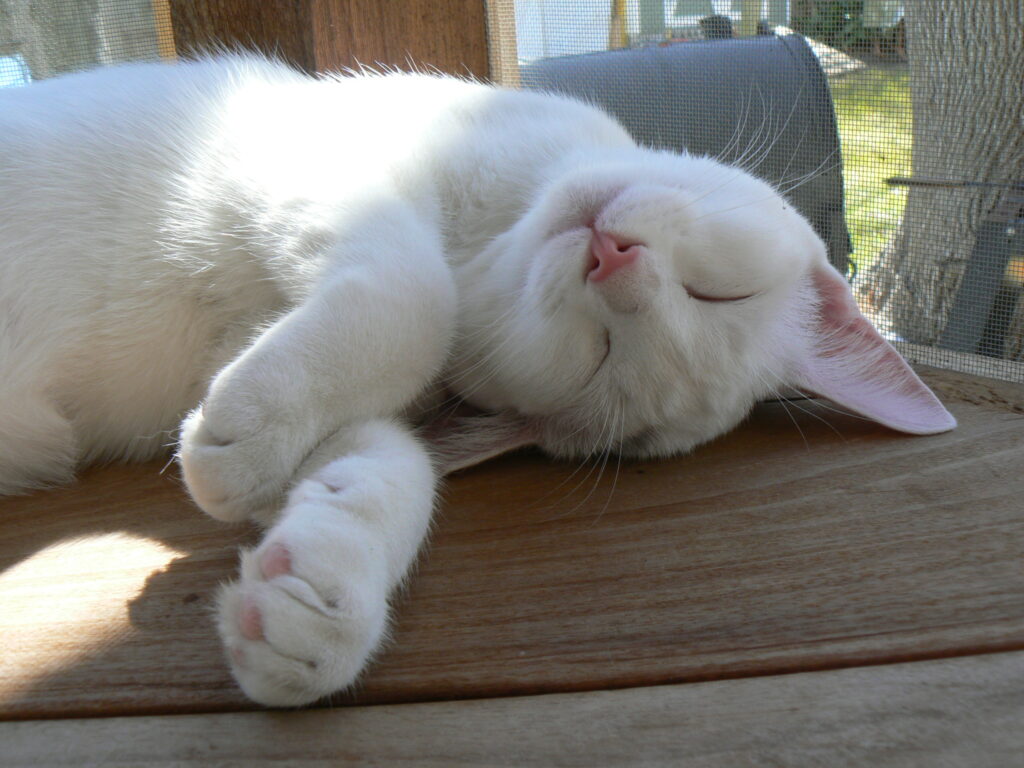
Four years ago today, I was smack in the middle an adventure: a transcontinental bike ride.

When I finished that ride, my body was wasted: I had lost at least 15 pounds. You could see my ribs through my back. I decided it was time to find a more whole-body workout. I started doing a boot-camp workout with Gwen. I wouldn’t say that I enjoyed it, exactly, but it was definitely good for me. After a few months, I had finally resolved some weak spots left over from my broken pelvis, and had built up core strength that I’d really never had before. I was pretty regular about it for the next 3½ years or so, going three times a week, occasionally taking a month off when life got crazy. Boot camp completely displaced cycling for me. I didn’t do any serious riding after I got home from my big ride, only commuting around town.

A couple of months ago, that boot camp class ceased to exist as such when the trainer started a gym; he offers something similar at the gym, but I realized I don’t want to go to a gym. I was also missing riding. Today I went out with a friend for my first ride in four years. My neck’s a little stiff, and I was tired earlier than I should be, but it was good to get out there.

I still need to do some kind of whole-body workout. But I need to keep riding my bike.

Scroll to Top