Went to Burning Flipside this past weekend. Unfortunately, Gwen wasn’t able to be with me. We found out (after we had our tickets) that a friend was having a weekend-long wedding bash at the same time, and because this was the same friend who had officiated at our weddding, we didn’t feel like we could miss that. But because The Powers That Be at Flipside had gone out of their way to make it possible for us to be there, we didn’t feel like we could say no to that. So we split the difference: one of us went to Flipside, one went to Davey’s weddingpalooza.
For those who don’t know, Flipside is a “regional burn,” a companion event to Burning Man, which started it all. Flipside is the oldest and largest of these regional burns. What these burn events are is a little harder to explain. When I don’t want to go into details, I call it a camp-out, but that’s like calling the Grand Canyon a ditch. It’s also an intentional community, an art festival, an experiment in “radical self-expression and radical self-reliance” (meaning: anything goes, and you better be able to take care of all your needs except for sanitary facilities). At the popular-perception end of the scale, it’s also an opportunity to do a lot of drugs and see a lot of boobies, but again, that’s completely missing the point.
The Intentional Community
Larry Niven wrote a science-fiction story called “The Anarchy Cloak,” which I read as a teenager. It was a gedankenexperiment about a future society with “anarchy parks” where anything goes, as long as it’s not violent–and there are little hovering robots to zap you if you get out of line. His story explores “what happens when the little robots get knocked out”–basically, warlordism in miniature. Niven’s view of human nature is cynical, albeit with ample justification.
Flipside is like an anarchy park, but without the same social-control mechanism. People are generally decent to each other because they want it to work. There are rangers to deal with problems, and problems do exist, but for the most part the rangers seem to get people to back off from confrontations and deal with people who have OD’d on some drug or another. I was discussing the whole experience with a ranger, Keeper, on the way out, and she observed that people show up not only wanting to make the event work, but to do something to make it better.
Flipside is a place where you can watch good karma in action. At Circle of Fire, the theme camp for firespinners, we had the dual problems of an inadequate sound system and inadequate power supply for it (despite Scott’s ingenious efforts), along with the fact that we were near two DJ’d camps, and would be competing with their sound output. Scott and I had strategized ways to deal with this without really coming up with a solution. At one point, I was filling the tiki torches surrounding CoF, and someone came over asking to bum some fuel for his tiki torches. I offered him all he wanted (there was still plenty left over when we were packing up to go home), and he asked if I wanted anything in return. I said no. He then told me he was from one of the adjacent camps, Winner’s Circle (whose DJ had been spinning vinyl I really enjoyed spinning fire to), so I said “you know, there is something you can do for me: point one of your speakers at the fire circle.” He was happy to do that, and our music problem was solved.
The Extravagant Gesture
Flipside, like other burner events, involves an astounding amount of work for a very large number of people who are derided as hippies and slackers in everyday life. An ordinary person showing up at Flipside would observe the amount of work going into creating a temporary community and ephemeral art, and shake his head in incredulity. Even the simple act of showing up at an event like this involves bringing a hell of a lot of shit for most folks. I showed up with my little wagon packed to the gills, and one of my campmates said, without sarcasm, “you travel light!”
The psychological cornerstone of every burner event is an effigy that is burned on the last night. At Flipside this year, the effigy was a rocket (resonating with this year’s theme: “Innergalactic Circus”). Major sub-assemblies for the rocket had been completed offsite in advance, and were assembled on the spot The result was (I am guessing) about 40 feet tall, and built like a brick shithouse. Seriously: houses that people live their whole lives in probably are not as solid. As I understand it, Dave Umlaus was in charge of the rocket’s construction. I doubt he slept for a week, and construction was still underway just a couple of hours before the burn.
What’s the point of building something, only to burn it down as soon as you finish? There are a lot of ways to answer that. To acknowledge the temporary nature of all things. To put on an exciting show. To create a ritual in which people can cast off the past and purify themselves. To have fun burning shit. Ephemeral art is common in Japan (cf: ikebana) and in other cultures. Perhaps this kind of thing wouldn’t seem so strange (at least for that reason) elsewhere.
Part of the reason behind this is the “wanting to make it better.” I think there’s also an element of auto-one-upsmanship, that is, people think “well, we did this pretty well last year, but we can do better this year.”
This is the most obvious example of the extravagant gesture, but only one of many. I was talking with my friend !Bob about the LED ring, which describes a very large circle around the effigy (this area is referred to as the L2C). Bob had written the code (in Assembly, no less) to control the lighting patterns of the ring, and explained to me just how homemade the damn thing is. I had seen it before, but never knew that it started life as epoxy mix, lumber, bare LEDs, custom-printed circuit boards, and some cheap off-the-rack chips. !Bob had dedicated a ridiculous amout of time to writing patterns for the ring, only to have his efforts stymied by various hardware malfunctions–overextending the limits of the serial communications protocol between the panels, two power supplies that failed because of the rain, poorly soldered joints on the boards, etc.
At many theme camps, people had schlepped out domes or other massive shade structures, DJ rigs and speaker setups, enough rugs to carpet the entire interior, etc. Perhaps the most extreme example was Chupacabra Policia, which set up a three-story scaffolding stockade, surrounded by a locked barbed-wire gate, blaring Extremely Strange Music, fake news reports, and intimidating directives over their PA at all times. Its members adopted names like Bootcutter, and wore uniforms with custom badges and emblems. They even had their own squad car. As Bootcutter put it, it’s not easy being that obnoxious, and that makes it a higher form of art. Just to piss off any feelgood PETAphile hippies, they made themselves notorious for slaughtering and cooking chickens at their camp.
Food
Andy, a firespinner from Germany, seemed to be marking his Flipside experience by the meals he ate. At every theme camp, someone was pushing some kind of meal on him. We had been chatting for a couple of minutes when he excused himself because a camp up the hill was about to be serving chili.
A lot of people (me included) pack way too much food so that they’ll have something to offer to others. At Spin Camp (where I sited my tent), we had a de-facto cook, Crispy. She had brought along hard-boiled eggs from her own chickens. She made cowboy coffee over a campfire every morning. On Friday morning, she made bacon/skirt-steak skewers for breakfast. On Sunday, she filled two massive cast-iron kettles with breakfast-taco fixing (again, using eggs from her chickens) and cooked them over the campfire. At other camps I saw Greek food, fajitas, burgers, chili, etc. One camp (Better Brains Bureau) made a name for itself by handing out chocolate cake and bacon for breakfast. Right after I heard about this, I ran into Striggy on the trail down to the field, and mentioned this to her. She enthused that that was exactly what she wanted.
The counterpart to all this food, of course, is booze. I packed a case-worth of good beer, which I barely made a dent in (beer is not as effective for hydration as water, and hydration is important). Also fixings for damn good margaritas, which, again, mostly went unused despite my persistence in offering them around. There were several theme camps that ran open bars as their centerpieces.
Music
There’s a lot of it, and it’s loud. If you read the theme camp descriptions, you’ll find a lot with vague, trippy descriptions that don’t tell you what will be going on at that camp. These can mostly be translated as “we will have DJs and lasers.” Different camps had different musical styles, of course, and there’s enough variety that anyone can find something that they’ll like. There was at least one camp spinning 130-bpm trance music more or less non-stop, and it all sounded the same. Wonderlounge, next to Spin Camp, had an interesting musical selection that I mostly enjoyed, but kept some of my camp-mates awake later than they wanted. Some of my camp-mates were using both earplugs and earmuff-style protectors to block out the sound.
The real problem with all this highly amplified music is that when you’re down on the main field (which some people wistfully refer to as “the playa”) and between music-oriented camps, you can hear at least two–and probably three–different tracks at any given time. This was a problem at CoF, because we were pretty much relying on the sound from a nearby camp for our music, and when you’re twirling fire, it really helps to have a beat (just one) that you can groove on.
Events
There are a lot of different events during the long weekend, which are all more or less open for anyone to participate in (that’s the whole idea). Both CoF and Spin Camp were holding poi lessons, in addition to hosting fire circles. Spreader Bar & Grill was tying Japanese-style bondage knots on anyone who asked, and you could see a lot of people wandering around with elaborate trusses around their torsos. There was a “Cthulhu Devival Hour.” A “Miss Flipside” competition, which was most entertaining–the first round of judging was an obstacle course in which contestants had to light someone’s cigarette in a creative fashion, hammer rebar with a sledgehammer, and wipe something–anything (and they did) with a wet-wipe–all while carrying a tray full of drinks. The second round consisted of the talent and interview portion. I have no idea who won, but my favorite contestant was Miss Firepants, who had enough attitude to power a small village.
There was a wedding held there. I didn’t know any of the parties involved, but a fire-friend did, and he asked me to be one of several people spinning fire as part of the ceremony. I was happy to oblige. As I heard it, civilians were also being trucked in to take part in the service, and I can only wonder what they thought of the freak procession (which was over a hundred people).
Rain
It has rained at every Flipside, as far as I know. This year it rained a lot–some folks were calling the event Burning Mudslide.
We had a relatively brief but heavy storm on Friday night. This fried two power supplies used in the LED ring, and made a hash of many campsites.
Saturday night, we had a rainstorm strike earlier. It was obvious that storm clouds were rolling in, so we had time to batten down the hatches, and I made it into my tent about a minute before the first drops hit. Some folks stayed out and made merry anyhow, but it was a massive storm that dumped sheets of water on us for hours. I am pleased to report that my tent basically stayed dry (upon striking it, I discovered that there was a small divot under my tent, and a pool of water had collected between the groundcloth and tent floor, soaking through the floor, but my air mattress was between me and the water). I took a nap. When I woke and found the rain had stopped (around 4:00 AM, I guess), I pulled on my shoes and walked down to the field. Except for one camp, it was dark and quiet. That was worth experiencing.
Fire
The big draw for me is the firedancing. Although my tent was at Spin Camp, I put in more work at Circle of Fire (both of which are oriented towards firespinning).
Because of the nature of burner events (hell, even the name), firedancers seem to have enjoyed a little bit of priviliged status at these events. But firedancing has become common enough within the freak community that the priviliged status seems to have worn off–it doesn’t draw as much of an audience, or as many would-be spinners eager to learn, and a lot of firespinners have decided that they have better things to do at flipside than burn.
If this sounds like I’m bitter, I’m not. There were a number of fire performers at Flipside who I knew by reputation, or who I saw goofing around during the daytime, and I would have enjoyed watching them more and doing fire-stuff with them more than I did–but it was a pleasure to watch them and play around with them as much as I did. If you’re out there–Skunk, Nico, Rachel, and Dan–I had a ball. Andy, the firespinner from Germany, never lit up that I saw, but he always had his poi in his hands, and would distractedly toss off crazy moves while chatting with you. I also noticed that he seemed to have his keys clipped to his wicks, for some reason.
Stress
Some time before Flipside, Tym asked me to coordinate the fire performance before the big burn of the effigy on Sunday, and I accepted. This turned out to be the overriding aspect of my Flipside experience.
I developed a general plan for how to organize the fire performance. Nothing very complicated–I knew that any plan would need to allow for a lot of flexibility. And I wanted to strike a balance between two conflicting schools of thought on how the performance should be organized: those who thought that it should emphasize talent and showmanship, and those who thought it should maximize participation and inclusion. In case this is of any value to anyone in the future, my original plan was this:
- Divide the circle into eight wedges.
- Have performers segregate themselves by ability. Beginners would serve the same role as backup singers, and would station themselves along the back edges of each wedge, laying down a simple pattern with transitions every four measures. More proficient performers would be front and center, going crazy.
- With 15 minutes of performance time, we could divide the performers into two or three shifts, so that as one performer went out, another would file in.
- No fire-breathing. I was concerned that the circle would be too crowded and dynamic, and that the crowd would be too close to have safe fire-breathing. This probably pissed off a couple of people.
I had put out a request on a couple of Internet forums asking people who wanted to take part to contact me in advance. A few people did, but there were clearly far fewer respondents than there would be participants.
So at Flipside, I started tracking people down who I knew personally, knew by reputation, by referral, or who I just saw playing with firedancing equpment. I explained to everyone where and when to assemble, what to do, and what my plan was. And it was interesting that I got pushback from a few people who said the plan was elitist or hierarchical, but I knew that any plan would be unsatisfactory to some people, so I shrugged it off. I asked everyone to pass word on to other fire performers they knew. I found the “drum gods” camp and asked them to send a contingent of eight drummers to lay down a steady beat–my original idea was one drummer per slice. They explained they all had to be in one spot to stay on the same beat, but that the sound would carry across the ring. They were especially concerned about hot fuel being cast off by a wick, hitting a drum head, and destroying it.
On Sunday morning, someone asked me how many people I expected would be taking part. I answered “between 10 and 100.” In fact, I thought the number would be about 60.
At about 6:00 on Sunday, I just happened to be present at a war council in the circle around the rocket (having just marked wedges with orange spray paint), discussing the latest weather forecast: there was a thunderstorm watch, flood watch, tornado watch, and chance of hail for the entire county. Oh, shit. Everyone stands around with very serious faces, wondering “now what?” Dave Umlaus, who looked like he had been run through a cheese grater and hastily reassembled into his original form, absorbed the news with a dead expression. The original plan was for rocket ignition at about 10:00 PM, and it was decided that we would try to stick to that plan, but might move the launch up by one hour, to avoid the worst of the weather–apparently, high winds were the main concern, as they could carry embers into the trees.
This meant that I had to track down everyone I had previously told to assemble at 9:15, and update them that they should be there at 8:15. Maybe. Tym apologized to me unnecessarily, and I said “if I wanted to take it easy, I would have stayed home.” I started making a couple passes throughout RecPlan, and seemed to manage to find almost everyone who needed to be found. I also found a few people who had never gotten the invitation in the first place, so I was able to get them on-board. I stopped by the drum gods again–they had heard something was up, but wanted to get my story. After the previous night’s rainstorm, they decided to place their biggest drums on one of the “gator” utility carts that constantly crisscross the site, so they could drive it under the nearby roofed pavillion at the first sign of rain.
This was stressful.
I changed into my eveningwear, and someone from my camp (also named Adam) blasted some glitter onto my brightly sunburned torso. I grabbed a granola bar for dinner, and carried extra fuel down to Circle of Fire, the place where everyone was going to congregate. I arranged the fuel depot to make it clearer what was going on.
At this point, the decision on when to launch the rocket was still up in the air, and in fact was not going to be decided until the last minute. That decision was up to the fire marshal.
Tym was leading a parade throughout the site, gathering up people from every camp as he went. His original plan (also a shambles now) was that the parade would arrive on the field just in time for the firedancers to start their show, then we’d do our thing, and then the rocket would be lit. Instead, he had to arrive on the field early and lead the parade through multiple laps around it. On one lap he gave me his bullhorn so that I could rally my troops. It turned out that there were a little over 30, with about a dozen safety people. I had them count off by eights to determine their position on the circle, had them start soaking and spinning out their wicks. At this point, I had too few firespinners to justify taking shifts, but 15 minutes of time to fill, so I told everyone to resoak and come back out immediately.
On another lap around, Tym came over and said “as of now, all your people need to be ready to go on at a moment’s notice” and I relayed this. Sure enough, a few minutes later, Tym came by again and said “get them out there now and light them up.” So they did. I patrolled the perimeter while they burned. One of the safety people took me aside and explained that someone in her wedge (whom I had not met) was insisting on fire-breathing–the safety had explained my position, but he was adamant. As it turned out, this wasn’t a big deal, since there was a pretty wide band between the fire performers and everyone else, being patrolled by rangers, and the circle itself wasn’t that crowded.
After about five minutes of burn time, someone came to me and told me “we have to clear the circle now.” So much for the re-soak and re-light plan. I ran over to the fuel depot and told everyone to stop re-dipping, though a few people got past. I went back out to the circle and hollered at everyone to clear the circle. A couple of showboats delayed leaving for a couple minutes, but apparently that wasn’t a deal-breaker.
Once the field was cleared, we waited. There were drummers everywhere, people hooting and hollering. The predicted storm was gathering–massive thunderheads, with frequent lightning. It made a perfect backdrop, and I half-expected a lightningbolt to strike the rocket. After some period of time, thrusters at the bottom of the rocket fired and everyone went nuts. Although there was a spinning fire-fountain on the top of the rocket, and it had been test-fired the previous night, it did not fire at this time. I suspect there were a hundred things that went wrong (the LED ring was completely shut off), but there was so much going on that you’d never miss it if you hadn’t known it was there. It took a while for the rocket to really start burning in earnest, but once it did there was a massive wave of heat that pushed everyone back about ten paces. It took a long time to burn and collapse (there was a lot of wood in there, and it was solidly built). It was sending embers perhaps 100 feet into the air, with the smoke creating a weak vortex. Firefighters were spraying their hoses to wet down the field downwind. As soon as the edifice had collapsed and the heat died down a bit, a lot of people moved inside the LED ring, and started walking in a circle around it. I was relieved and happy things had gone off as well as they did, and I hugged, congratulated, and thanked people as I went by or they did. As the fire died down a little more, people moved in to get as close as they could tolerate. Firespinners stepped into the band between the embers and the rest of the crowd (that is to say, the zone where the heat was intolerable). I grabbed my chains and joined them. After four light-ups in the hot zone, my sunburn was twice as bad–practically purple.
The storm mostly passed us by–we got a light sprinkling, but that was it. I wound up turning in relatively early. It was difficult to find a comfortable position to lie in with my sunburn, but I managed to get a pretty good night’s sleep.
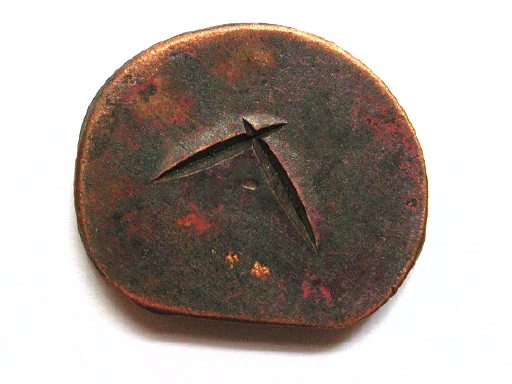
The next morning, I hastily struck my own campsite (which was still kind of wet and muddy) and got it ready to load. I grabbed some garbage bags and went down to CoF to pick up the cigarette butts, tinsel, bottlecaps, etc. Finished up with that and went back up. Went to get my car, and found it blocked in by a gator–apparently someone at the adjacent camp had OD’d, and there were rangers and medics dealing with the situation. A few minutes later, though, I was able to get my car out. I loaded it up quickly and said goodbye to my camp-mates. On my way out, I saw Jori, a camp-mate and ranger, and said goodbye to her. Another ranger came over and asked “can you give someone a ride to the airport?” I said sure, and they loaded up Keeper and her one duffel bag (talk about travelling light!). The ranger gave me a piece of “flipside currency”–I have no idea what I would do with it, and I’m not inclined to part with it anyhow.
More
I’ll write more as I think of it.